

As an educator, have you considered how your passions are reflected in your classroom environment? This mirroring of interests, a key element of my experience with Project-Based Learning, is eloquently encapsulated in W.B. Yeats’ phrase, “Education is not the filling of a pail, but the lighting of a fire.” In PBL, this convergence of educator and student passions creates a rich learning atmosphere. Teachers often express their interests through classroom décor, be it movie posters that spark discussions about storytelling or a corner dedicated to a favorite hobby that invites curiosity. Such personal touches, ranging from thematic displays to collections of books or artifacts, transform the classroom into an inviting space that not only brightens the learning environment but also serves as a catalyst for engaging and inspiring students. In this way, a teacher’s passion, subtly integrated into the classroom, lays the groundwork for a dynamic educational journey where curiosity is nurtured and diverse interests are celebrated.
Now, imagine the transformative potential if students could bring their interests and passions to how they engage with the curriculum. Just as a teacher’s personal touches in the classroom spark curiosity and connection, allowing students to infuse their passions into their learning experiences could revolutionize education. This is the heart of PBL, where students’ unique interests – be it in technology, arts, sports, or literature – are not just acknowledged but actively integrated into their academic journey. Such an approach not only personalizes learning but also deepens understanding, fosters engagement, and cultivates a sense of ownership over their educational path. When students see their passions reflected in their studies, learning becomes more than an obligation; it transforms into an exciting venture of exploration and discovery, resonating with their personal world and aspirations.
PBL’s Evolution: A Tale of Shared Passions
PBL has matured into an approach that intertwines the passions of teachers with their students’. Defined as “the act of using a project to develop hands-on engagement where students, fueled by their curiosity and passion, work collaboratively to explore, absorb, and internalize classroom content beyond rote memorization,” PBL becomes a dance of mutual enthusiasm. As an educator, my passion for teaching and my subject matter becomes a catalyst, inspiring a similar enthusiasm for learning in my students.
The Story of My Student, Ava: A Fusion of Art and History
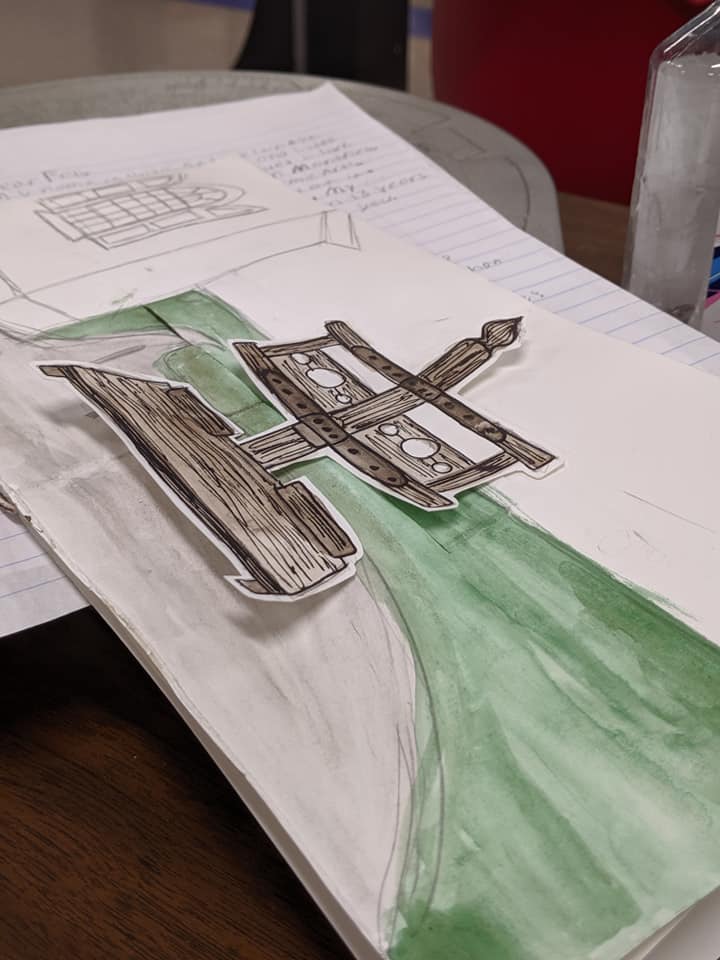
One of the most transformative examples of this synergy in my classroom was the journey of Ava, an eighth-grader with a deep passion for art. When faced with a project on “Life in the Early American Colonies,” Ava brought history to life through her art. She created an intricate pop-up storybook that depicted colonial life with a richness and vibrancy that only her artistic touch could achieve. This project was not just an assignment; it was a manifestation of the powerful blend of her artistic passion and my goal to create engaging, meaningful learning experiences.
My Role as a Teacher: Fostering and Fueling Passions
In guiding Ava’s project, my role extended beyond the traditional boundaries of teaching. It was about recognizing and nurturing her artistic talent and providing opportunities for her to express this passion academically. This is what passion-driven PBL is about – as a teacher, I strive to harness my passion for education to encourage my students to explore and express their interests within our curriculum.
Transforming the Classroom: A Community of Passionate Learners
Ava’s project had a profound impact on our classroom environment. Her peers, inspired by her engagement and creativity, began to explore their passions within their academic projects. Our classroom transformed into a dynamic space where a shared enthusiasm for discovery and expression drove learning.
The Dual Impact of Passion-Driven PBL
The benefits of passion-driven PBL are twofold:
- Enhanced Student Learning Through Personal Interests: Ava’s art-infused history project exemplifies how integrating a student’s passion can deepen their understanding and engagement with the subject matter.
- Renewed Teacher Enthusiasm for Education: Witnessing Ava’s growth and the transformative effect on her peers reinvigorated my passion for teaching. It served as a vivid reminder of the impactful and rewarding nature of our profession.
A Journey Towards Inspired Education
As we conclude this introductory glimpse into the world of passion-driven PBL, it’s important to remember that Ava’s story is just the beginning. Her journey serves as a powerful illustration of how PBL can transform education, challenging us as educators not just to teach, but to passionately engage with our students, creating an environment that empowers them to discover and express their interests. As you reflect on your teaching practices, consider how you can ignite a similar passion for learning in your students and develop experiences that are both academically stimulating and personally resonant.
This post marks the start of our deeper dive into PBL. We’ve seen how this approach can shift a classroom from a traditional setting into a lively hub of creativity and intellectual exploration. Together, we’ll continue on this path, exploring how the fusion of our passions with those of our students can illuminate the way to an inspired and enriching educational adventure.


 modernpbl.com
Leave a comment