

In the realm of education, few methods have the transformative power of Project-Based Learning (PBL). Reflecting on my own journey with PBL, I recall the initial challenges of integrating this method into my teaching practice. However, the defining moments that solidified my commitment to PBL were witnessing the remarkable projects my students created, projects that went beyond mere assignments to become profound expressions of understanding and creativity.
A Proactive Approach to Classroom Transformation
As an educator, I staunchly believe that my classroom will not spontaneously improve; the impetus for enhancement lies with me. Embracing PBL is my proactive solution. It is a powerful toolkit that empowers me to cultivate a more impactful, engaging, and relevant learning environment for my students. Rather than passively awaiting improvement, PBL enables me to drive change. This approach demands active integration into my planning, fostering active learning, promoting critical thinking, and nurturing creativity and problem-solving skills in my students. With PBL, my classroom is transformed into a dynamic space for exploration and discovery, where students are not mere participants but active co-creators of their learning journey. By adopting PBL, I am not merely hoping for an improved educational setting but actively creating it. This perspective underscores my role as an educator: acting as a catalyst for change and a facilitator of enriched, student-centric learning experiences.
The Essence of PBL
My journey into PBL began with a desire to create lasting educational memories for my students, reminiscent of the impactful projects from my own schooling. Initially, my approach was to provide detailed instructions, expecting students to add their flair within a structured framework. Yet, as I delved deeper into PBL, I realized that projects should not be the dessert of our learning feast but the main course.

Crafting a simple, actionable definition of PBL was a turning point: Project-Based Learning is the act of using a project to develop hands-on engagement where students, fueled by their curiosity and passion, work collaboratively to explore, absorb, and internalize classroom content beyond rote memorization. This clarity transformed my pedagogical approach, embedding projects as central to our learning journey, thereby unlocking the true potential of PBL.
Incorporating passion into our educational framework, truly ignites a metaphorical flame within the classroom. During a pivotal conversation with Suzie Boss, a prominent author on PBL, the relationship between passion-based learning (PsBL) and PBL was elucidated. Boss highlighted how intertwining student passions within projects not only amplifies their innate motivation and sense of ownership but also elevates their learning journey to new heights (Boss, personal communication, June 21, 2023).
“When students are given the opportunity to infuse their unique skills and passions into their projects, they experience an unmatched level of engagement and purpose,” Boss explained. She advocates for crafting projects that allow for individual self-expression and passion, tapping into the inherent motivation of students and cultivating profound learning experiences. These experiences not only encourage students to assume responsibility for their learning journey but also transform the classroom into a dynamic space for exploration and discovery.
Innovative Student Projects: A Closer Look
The true power of PBL lies in its ability to foster originality and personal investment. Let’s delve deeper into two standout projects that epitomize the impact of this approach.
The Lighthouse of Understanding
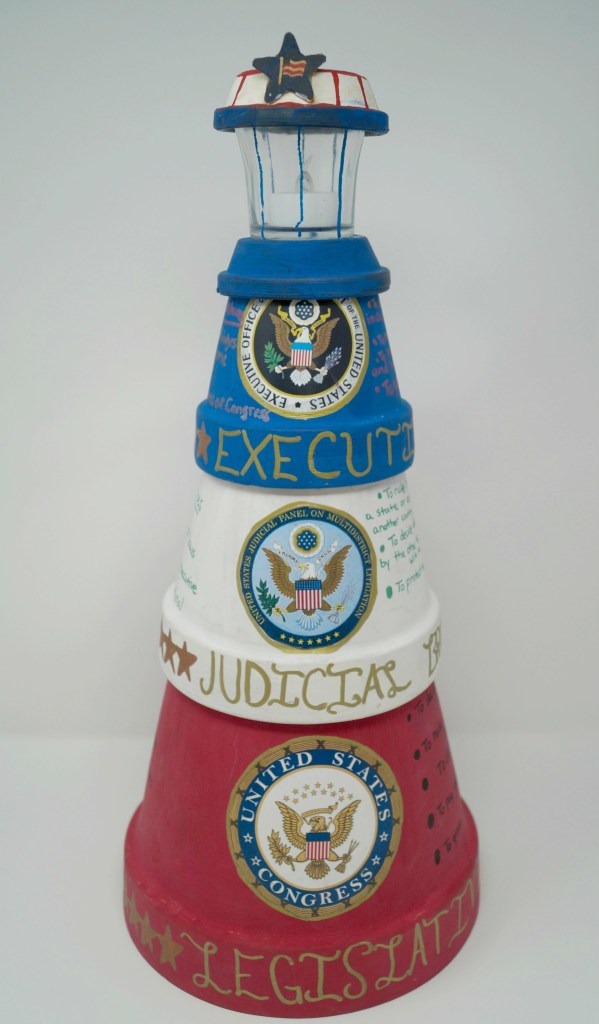
One student’s exploration of the US Constitution culminated in an extraordinary project: a lighthouse constructed from clay flower pots. Each section of the lighthouse represented a branch of the U.S. government, with the Legislative Branch forming the base, the Judicial Branch serving as a mediator, and the Executive Branch at the pinnacle. A candle, changing colors to symbolize the diversity of our nation, crowned the lighthouse, shining freedom’s light to the world. This project wasn’t just a representation of the Constitution; it was a deeply personal interpretation of how our government operates, highlighting the checks and balances system’s elegance.
The Garden of Self
Another project that left an indelible mark was created by a student who, before engaging in PBL, had never experienced the joy of learning through projects. Tasked with creating a project that represented her, she crafted a flower pot filled with paper flowers, each element symbolizing aspects of her personality and interests. The leaves, made from her favorite book covers, and petals, adorned with paw prints, reflected her passions for reading, animals, and Pokémon. This project was a turning point for her, transforming her engagement with school by providing a platform to express her identity in a way that was meaningful and empowering.
Beyond Projects: The Impact of PBL
These projects exemplify PBL’s transformative potential, illustrating how students can apply their understanding in innovative ways when given the freedom to explore their interests. By embedding projects as the core of our curriculum, we not only encourage deep learning but also foster a sense of ownership and pride in our students’ work.

Transitioning to PBL requires educators to embrace a significant paradigm shift. Moving away from the traditional stance of lecturing from the front of the classroom to fostering student-led exploration can be uncomfortable. This shift often elicits concerns, with some educators fearing the approach is too unstructured, saying, “There’s no way I’m letting students just Google everything!” Yet, this is when it becomes crucial to look beyond our reservations and consider the empirical evidence supporting PBL’s efficacy.
Research funded by Lucas Education Research (2021), a division of the George Lucas Educational Foundation, has contributed valuable insight into PBL’s impact across various grades and subjects. Their seven-year study highlights that PBL not only enhances academic performance, as seen in students’ increased likelihood of earning passing scores on AP tests but also promotes social and emotional learning across diverse groups. Middle school students in California and third-grade students in Michigan, for instance, demonstrated superior performance in science assessments compared to their peers in traditional settings. Furthermore, second-grade students in Michigan experienced accelerated learning in social studies and literacy through PBL.
Another study conducted by Mohammed Abdullatif Almulla (2020) identified collaborative learning, disciplinary subject learning, iterative learning, authentic learning, and social and emotional learning as critical factors in PBL that boost student engagement. PBL’s constructivist nature actively involves students in authentic tasks, fostering innovation, collaboration, and social-emotional learning, proving particularly effective in higher education settings.
PBL challenges educators to rethink their roles, shifting from dispensers of knowledge to facilitators of discovery. It requires a classroom environment where student voice is not just heard but valued, where projects are not constrained by rigid expectations but are free to take on forms as unique as the students themselves. This shift is not without its challenges, but the wealth of research supporting PBL’s benefits underscores its value in cultivating a more engaging, relevant, and impactful learning environment.
A Call to Action
As educators, our mission extends beyond teaching facts; it’s about inspiring a love for learning, nurturing critical thinking, and preparing students for the complexities of the real world. Project-Based Learning is not merely a teaching strategy; it’s a commitment to creating educational experiences that resonate with students, igniting their passions and unleashing their potential.

The journey of integrating PBL into your teaching practice is both challenging and rewarding. It calls for a willingness to embrace uncertainty, to celebrate creativity, and to recognize the profound impact of giving students the reins to their learning. Let us dare to transform our classrooms into spaces of endless possibilities, where every project becomes a stepping stone towards a more engaging, meaningful, and student-centered education.


 modernpbl.com
Leave a comment