

As teachers, especially those who embrace Project-Based Learning (PBL), we’ve all faced the challenge of evaluating student work in a way that is both fair and constructive. Traditionally, rubrics have been our go-to tool for grading assignments. But what if rubrics could be even more powerful when used not for grading but for setting expectations and providing feedback before a grade is ever given? Let’s explore this idea and see how it can transform our PBL classrooms.
The Problem with Traditional Rubrics
Rubrics are often seen as the ultimate grading tool. They break down assignments into specific criteria, offering a clear roadmap for students to follow. Categories like Content Understanding, Organization of Ideas, Creativity, and Research are commonly used. While this structured approach can be highly effective, it also has its drawbacks.
In a PBL context, when rubrics are used solely for grading, they can become a source of stress for students. The focus shifts from learning and improvement to simply earning a grade. This can stifle creativity and discourage risk-taking, as students may aim to tick off boxes rather than engage deeply with the material. Moreover, students often overlook the feedback provided on graded rubrics, focusing solely on the grade itself.
A New Approach: Rubrics as Feedback Tools in PBL

Imagine a PBL classroom where rubrics are not the final word on an assignment but a guide for students to understand expectations and receive valuable feedback before any grade is given. This shift in perspective can change the entire learning dynamic.
Using rubrics as feedback tools means that they become instruments for growth rather than judgment. They can outline what constitutes meaningful engagement and help students understand how to improve. This approach emphasizes learning as a process, encouraging students to develop their skills over time. Most importantly, it ensures that feedback carries weight and is actually considered by the students.
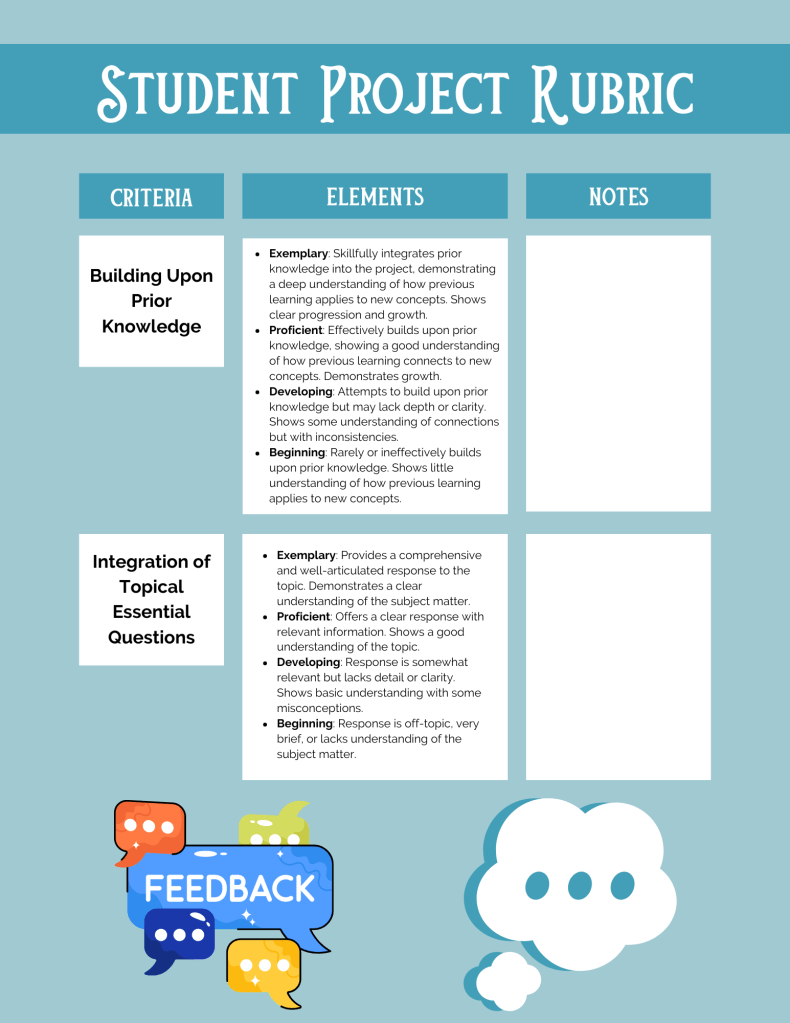
Rubrics can be a part of a feedback loop. You can begin by having the student fill out the rubric and do a self-assessment. This process helps students to identify areas for improvement as well as aspects where they have excelled. Combine that reflection with your feedback, and you have a powerful tool for continuous improvement for students. There is no grade on this document, only feedback, and you have added an accountability piece to the project development.
Benefits of Using Rubrics for Feedback in PBL
- Enhanced Learning: When students receive detailed feedback before a grade, they are more likely to understand where they need improvement. This can lead to a deeper grasp of the subject matter.
- Reduced Anxiety: By removing the pressure of grades initially, students can focus on learning. This can create a more positive and supportive classroom environment.
- Encouragement of Critical Thinking: Feedback-oriented rubrics can highlight the importance of critical thinking and real-world connections. Students will be motivated to engage more thoughtfully with the material.
- Personalized Feedback: Narrative rubrics, which provide detailed descriptions for each level of performance, offer qualitative feedback. This personalization helps students see their unique strengths and areas for growth.
- Alignment with PBL Principles: This approach aligns perfectly with the principles of PBL, where the focus is on the process, collaboration, and real-world application rather than just the final product.
Practical Implementation in PBL
So, how can you integrate this approach into your PBL classroom? Here are some practical steps:
- Design Your Rubric for Feedback: Create rubrics that focus on providing detailed descriptions of expectations. Use categories like Quality of the Initial Post, Engagement with Peers, Critical Thinking, Timeliness, and Real World Connections, but frame them in terms of feedback rather than grading.
- Use Narrative Rubrics: Narrative rubrics emphasize qualitative feedback over numerical scores. They provide students with a clear understanding of what is expected at each performance level and offer constructive suggestions for improvement.
- Provide Timely Feedback: Make sure to give feedback promptly before any grades are assigned. This reinforces the idea that learning is an ongoing process.
- Encourage Self-Assessment: Allow students to use the rubric to assess their own work before submitting it. This encourages reflection and helps them internalize the criteria for success.
- Create a Feedback Loop: Use rubrics as part of a continuous feedback loop. After providing feedback, give students opportunities to revise and improve their work based on the suggestions. This reinforces the idea that learning involves iteration and refinement.
- Embed Feedback in the PBL Cycle: Integrate rubrics into various stages of the PBL cycle. Use them during project planning, mid-project check-ins, and final presentations to provide ongoing feedback and support.
Conclusion
By reimagining rubrics as tools for feedback rather than grading, we can create a more supportive and effective PBL environment. This approach encourages students to focus on growth, critical thinking, and meaningful engagement. Most importantly, it ensures that feedback is considered valuable and impactful. So, let’s start using rubrics not as the final judgment but as a roadmap for learning and improvement. Give it a try in your PBL classroom, and watch your students flourish.
Download
Access a Rubric that I created for this very purpose, guiding students through their projects.


Join in the Conversation
I would love to hear how you are currently use rubrics in your PBL classroom, and what challenges have you faced with traditional grading rubrics. Do you have specific examples or templates for narrative rubrics? Share your insights in the Facebook group Modern PBL:Project-based Learning in the Digital Age. Also, if you would like to learn more about PBL, grab a copy of my latest book, Modern PBL: Project-based Learning in the Digital Age.


 modernpbl.com
Leave a comment