


Education used to thrive on content mastery: facts memorized, tests aced, answers parroted. But today? Knowledge is a tap away! AI churns out answers faster than any textbook, and the world’s problems, climate crises, tech ethics, social divides, demand more than recall. Students don’t just need to know; they need to do. Project-Based Learning (PBL) meets that need head-on, starting small with their passions and evolving the traditional classroom into a modern powerhouse. It’s not a seismic shift; it’s a natural next step, especially with AI in the mix, preparing kids not just to survive but to shape a future that’s already here.
Why PBL Is Non-Negotiable Now
The old model, drill, recite, repeat, worked when jobs valued rote knowledge and stability ruled. But today’s world moves too fast. AI writes essays, designs cities, predicts trends, leaving humans to wrestle with what machines can’t: creativity, critical thinking, adaptability. Students need skills to navigate this, not just facts to regurgitate. PBL delivers by turning classrooms into labs of real-world problem-solving, where a kid’s love for gaming or baking isn’t a distraction, it’s the spark for innovation.
Starting with their world keeps it simple. A student irked by a flooded street doesn’t need a lecture on climate change, they need a project wrapping a science standard around their curiosity. They research drainage, design a fix, and pitch it locally. Skills like analysis and application bloom, not because they’re forced, but because they’re needed. This isn’t overwhelming, it’s what classrooms were always meant to do: meet students where they are and push them forward.
Their World: The Bridge from Traditional to Modern
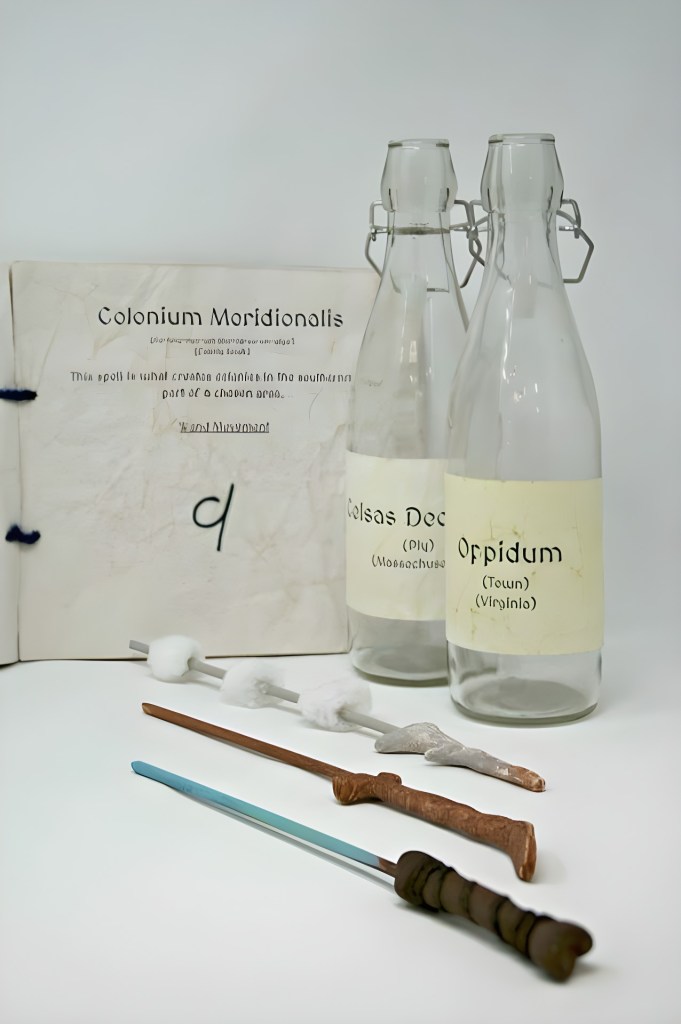
PBL doesn’t demand a revolution, it builds on what’s already there. Traditional teaching gave us structure: standards, units, goals. Now, weave in students’ passions, and it evolves naturally into something modern. Take Grace, a middle schooler studying the three colonial regions in America. She wrapped her love for Harry Potter around it, crafting wands, pine for New England’s shipbuilding, oak for the Middle Colonies’ farms, willow for the South’s plantations. Even the colors she used and the design of the handles all represented something from the unit. Her spell book mapped religious diversity with wand movements; her potions brewed the economy. When her project was finished, I took pictures of her project. Grace said, “Mr. Jones, this is the first time I’ve ever had a project get a photo shoot!” She beamed with pride.
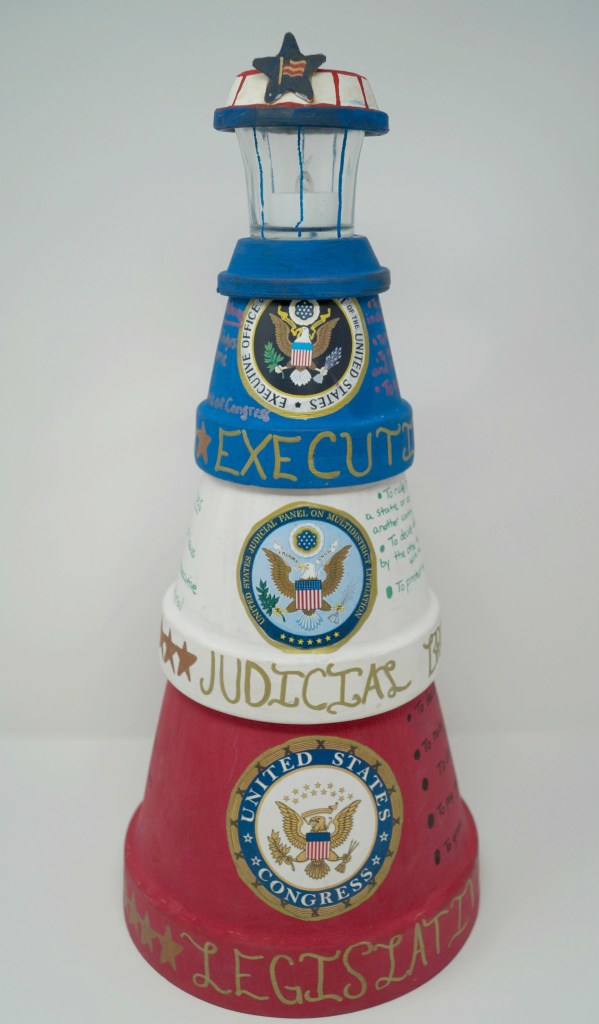
Then there’s Tatiana, a craft enthusiast exploring the three branches of government. She built a lighthouse from terra cotta flower pots, each layer symbolizing a branch. The Legislative, largest and closest to the people, anchors the red base, painted with the U.S. Congress seal and roles like lawmaking. The white Judicial pot rises next, etched with the Supreme Court’s duties—interpreting laws, protecting rights. The blue Executive pot tops it, bearing the president’s seal, guiding the nation like a lighthouse beam. A votive candle glows at the peak, shifting colors to show how America shines diversity to the world. She didn’t just learn civics, she crafted its story in clay and light.

Then there’s Sahar, who dove into the Protestant Reformation with her obsession for an Elmo meme. She reimagined key figures—Martin Luther, John Calvin, King Henry VIII, and Ignatius Loyola—as fiery Elmo characters, each surrounded by flames of change. Each Elmo clothed as the reformer, surrounded by objects to reflect the beliefs and missions of each. All were in flames because the Catholic Church saw each going to Hell. “This is my favorite project because it came from my heart,” she said, her voice glowing with pride.
All three engaged their worlds first, making their subjects theirs. They researched (digging into eras and systems), applied (mapping to creations), expressed (crafting wands, lighthouses, memes), and analyzed (reflecting on meaning)—skills blooming because they cared. Their teachers didn’t ditch the units—just handed them the reins. It’s not a leap from tradition; it’s a step. Socrates questioned to ignite thought—Grace, Tatiana, and Sahar questioned how their passions could reframe history and civics, igniting action. A math class could evolve the same way: ratios via a baker’s recipes or a car enthusiast’s gear shifts, still hitting the mark but alive with purpose. PBL turns traditional notes into launchpads, one passion at a time—designing not just lighthouses, wands, or memes, but a new way to see the world.
Scaling Up: From Personal to Planetary
Grace’s wands, Tatiana’s lighthouse, and Sahar’s memes didn’t stop at their desks. Their ideas spread. I want my students to see and feel the impact that their work is having on the world. Every time I share their work on social media, I let them know that teachers from all over the world have engaged with their projects. By displaying student work in the classroom, it can impact the student sitting next to them, the teacher across the hall, or a classroom across the world. Sharing these projects is education’s most contagious act, it opens eyes to what can be, lighting a path for teachers to unlock a whole new world of learning.
This small start scales big because today’s stakes demand it. A teen obsessed with sneakers is given the opportunity to wrap a sustainability standard around their personal interest in fashion, which leads to a student investing in research, designing a product that they wish existed, and engaging with content at a much higher level that leads to greater retention. It’s their world, shoes, but it’s the world too: education becomes something that they can impact instead of it being done to them. Skills grow, persistence through dead ends, creativity in solutions, because it’s personal. Then AI steps in: they analyze connections and get immediate feedback. What started as a passion hits, it can lead to career decisions thus having a direct impact on their community, then global relevance.
Confucius knew this: fix yourself, then your corner, then the world. A gamer codes a mental health app for friends, shares it schoolwide, then eyes a broader release, coding standards met, real problems tackled. PBL’s evolution isn’t disruptive, it’s organic, mirroring how humans have always learned: from what’s close to what’s vast. In an AI age, where tech solves and creates messes, this progression isn’t optional, it’s survival.
AI: The Modern Imperative
AI isn’t a gimmick, and it’s why PBL matters now. It’s rewriting jobs, ethics, everything. Students who can’t wield it critically will drown in it, accepting outputs blindly or outsourcing their thinking. But pair AI with PBL, and it’s a superpower. Tatiana could’ve used AI to model how the branches balance power, projecting her lighthouse’s glow; Grace could’ve modeled colonial trade for her potions; Sahar could’ve trained AI to analyze Reformation texts, spotting meme-worthy moments. They’re not passive, they’re pilots. Skills like research and analysis are enhanced because AI meets them where they are, their world. This is modern learning: hands-on, passion-driven, tech-savvy. Traditional classrooms taught us to read the world; PBL with AI teaches us to engage and rewrite it, one small, student-led step at a time.
Next Steps: Teachers, Start Here
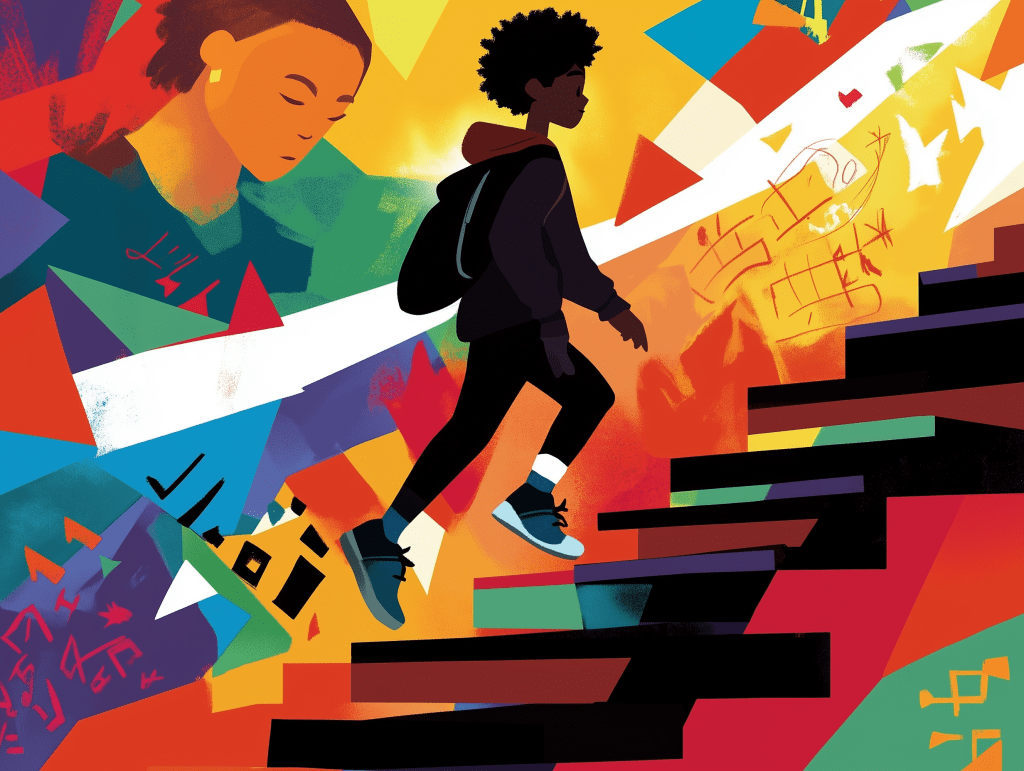
This isn’t a pipe dream, it’s your next class. Here’s how to evolve with PBL:
- Tap Their Pulse: Ask, “What’s one thing you love or can’t stand?” A quick poll—five minutes—gives you gold: skateboards, pets, a loud bus.
- Match the Map: Grab your next unit, say, Slope in Math or Potential and Kinetic energy in Science. Link their passions: a skater explores friction, a pet lover heat loss, a basketball player and foul shots. Standards stay; the student’s application is new.
- Start Small, Scale Up: Try a two-week project. They research (dig in), apply (test it), create (make it), analyze (reflect). Then ask, “Who could this help?”
- Add AI: Use a free tool, Suno for music, a chatbot from SchoolAI for ideas. Let them play: “What does AI see in your project?” It’s low stakes, high reward.
- Share It: End with a pitch, classmates, parents, a blog. Small wins build big momentum.
No overhaul needed—just tweak one lesson. The ancients started small too—Socrates with a question, Aristotle with an observation. You’ve got this.
Today’s Classroom, Tomorrow’s World
PBL isn’t extra, it’s essential. In an AI-driven, unpredictable world, students need skills, not just scores. Starting with their world, wrapping passions like crafting, Elmo memes, or Harry Potter around curriculum, evolves the traditional into the modern without breaking it. Grace’s wands, Tatiana’s lighthouse, and Sahar’s memes hit standards, honed skills, and opened eyes across classrooms globally. Sahar’s pride in her “heart project,” Grace’s photo shoot joy, and Tatiana’s glowing beacon say it all. Sharing these ideas is the most contagious act in education, unlocking what can be for teachers and students alike. AI turbocharges it, turning passion into power.
Imagine: kids who don’t just pass tests but fix streets, rethink tech, heal divides and all because they started where they stand. Teachers, this is your move. Next class, ask what drives them. Wrap it around their passions and interests. Watch it grow. The world’s not waiting, neither should you.


 modernpbl.com
Leave a comment